A few decades ago, as the internet became more widespread, a now-common term emerged: fanart. It refers to artwork created by fans to express their admiration for a particular story or character—usually from books, films, shows, or video games. But the term can also extend to works that reference any narrative or character belonging to someone else’s creation. In this broader sense, we enter the realm of artworks that might not be labeled “fanart” in everyday conversation but still fall under its umbrella.
Fanart is usually made by someone who doesn’t need to be a professional artist. It’s often a genuine and personal form of expression, typically with no commercial intent. These works are usually shared on websites, forums, or social media platforms where other fans of the same character or series tend to gather. These communities are known as fanbases or fandoms, and they’re the ones who comment on and share fanart, offering encouragement and motivation to the fanartist.
One of the things I noticed when I started making fanart was how far it could reach. When something is posted online, it usually includes tags or keywords to make it easier to find. My personal drawings, for example, often had generic tags like #nature, #animals, #people, or #urban scene. Fanart, however, includes tags with the character’s name or the title of the series it was based on. As a result, my fanart was quickly discovered by the fandom and received far more feedback than my original works.
Perhaps because fanart tends to get more attention, many artists choose to focus solely on it. In fact, you’ll find plenty of fanartists who advocate for this exclusivity, often arguing that it’s through reinterpretations that one’s personal style becomes most visible.
But this raises a few questions: Can fanartists truly claim ownership of their work? Isn’t using a character or franchise name a form of plagiarism?
The “Original” Picture
First, we need to distinguish between copying and reinterpretation. A copy aims to replicate an existing image exactly, while a reinterpretation seeks to imagine the subject through a new perspective. When an artist reinterprets a character, they’re essentially re-analyzing it, infusing the image with their personal vision. Even when trying to stay faithful to a scene or character, the artist inevitably adds elements of their own style — consciously or not.
Another common question is whether artists would be more valued if they created completely original work, rather than depicting things that already exist. But that leads to a deeper question: what is original? If we really think about it, we always represent things that already exist: people, animals, plants, objects. The way we build images is shaped by what we’ve seen before, whether in nature or in human creations. True creation —bringing something entirely new into existence — is impossible, because our entire creative repertoire and visual language are built upon knowledge passed down by others.
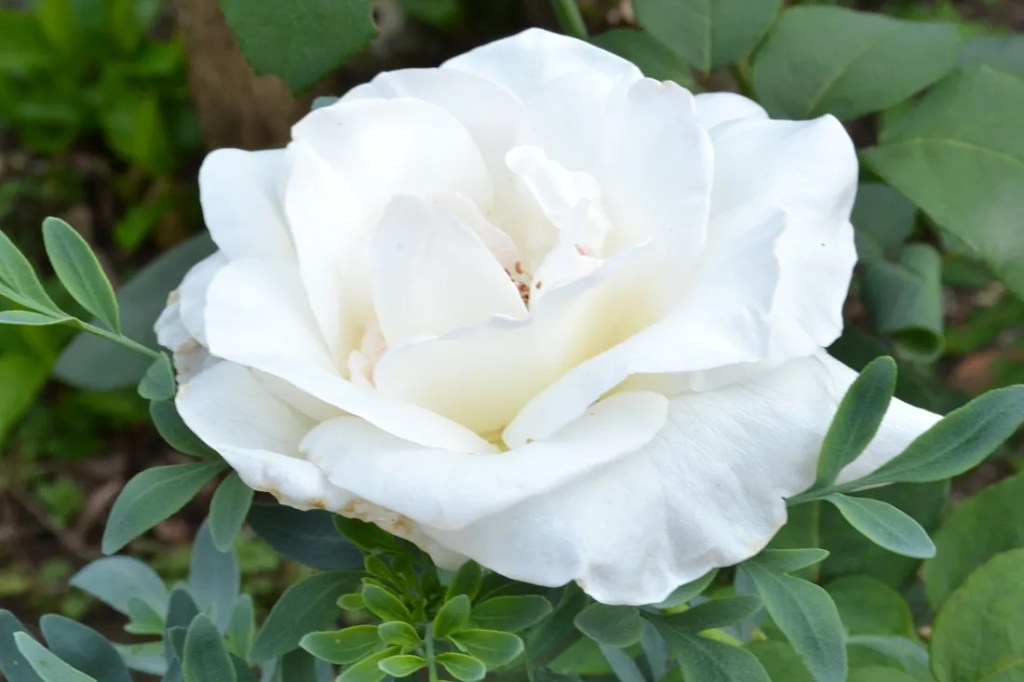
(The moment the image above was transformed into pixels when I took this photo, it became reproducible and could be viewed on any device that was displaying it. With the variety of media reproducing it simultaneously, the image is no longer unique, that is, it is no longer original.)
This becomes even more evident in the postmodern world, especially when we look at how we consume online content. We’re constantly surrounded by images that are endlessly reproduced across time and space. As Walter Benjamin noted, we live in an age of mechanical reproduction, where the concept of a unique, original image no longer exists. Just look at how an image online can display on countless screens: it becomes difficult to pinpoint which version is the “original,” since it’s now infinitely reproducible across millions of thousands platforms and devices.
The Art of Appropriation
In 2014, artist Richard Prince exhibited 38 large-scale prints at a New York gallery—each one a screenshot of a photo he found on Instagram. He didn’t ask the original creators for authorization, instead relying on a clause in the platform’s terms of service that implied all posted content was public. He printed the screenshots, blew them up in size, and sold each panel for $100,000. Naturally, many people were outraged. But that was the point: Prince’s work was meant to provoke us. How much control do we really have over images once they’re posted online, especially when the platform itself holds the usage rights?
What Prince did wasn’t exactly new. In the art world, this kind of work is called appropriation. It’s a simple idea: copy someone else’s image without asking and claim it as your own. Appropriation artists often use collage or make small alterations, but sometimes it’s a direct copy with only the signature changed. Another common approach is photographing a work of art and claiming ownership of the photo, though not of the artwork itself.
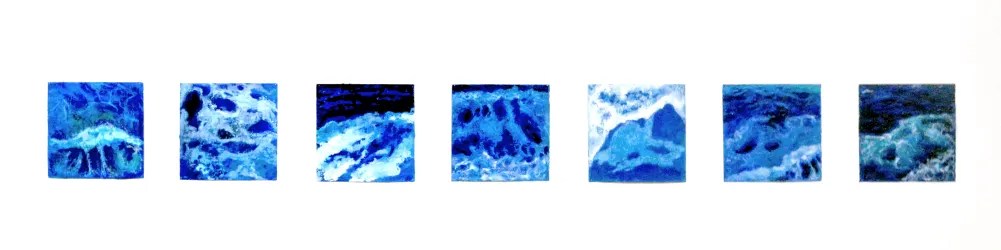
(This is a watercolor work by artist Dulce Osinski and exhibited at the UFPR Art Museum. But this picture is mine and I can sell it or exhibit it with my signature.)
There’s a whole field of study around appropriation, and in most cases, the artist knows they’re bordering on plagiarism; but they shrug it off, considering it part of their artistic process. After all, images are as fleeting as water slipping through your fingers.
In the end, it’s hard to define what truly counts as original. Every artistic idea has, in some form, already been explored. What’s left to us is the act of adapting, reworking, copying, processing and re-imagining what’s already been done.
 M. N. Vulpin